Roster dossier · 12 launch slots

Avatar Legends The Fighting Characters & Roster

A launch-day roster map focused on combat identity, confirmed information, and practical first-main selection—not an invented tier list.

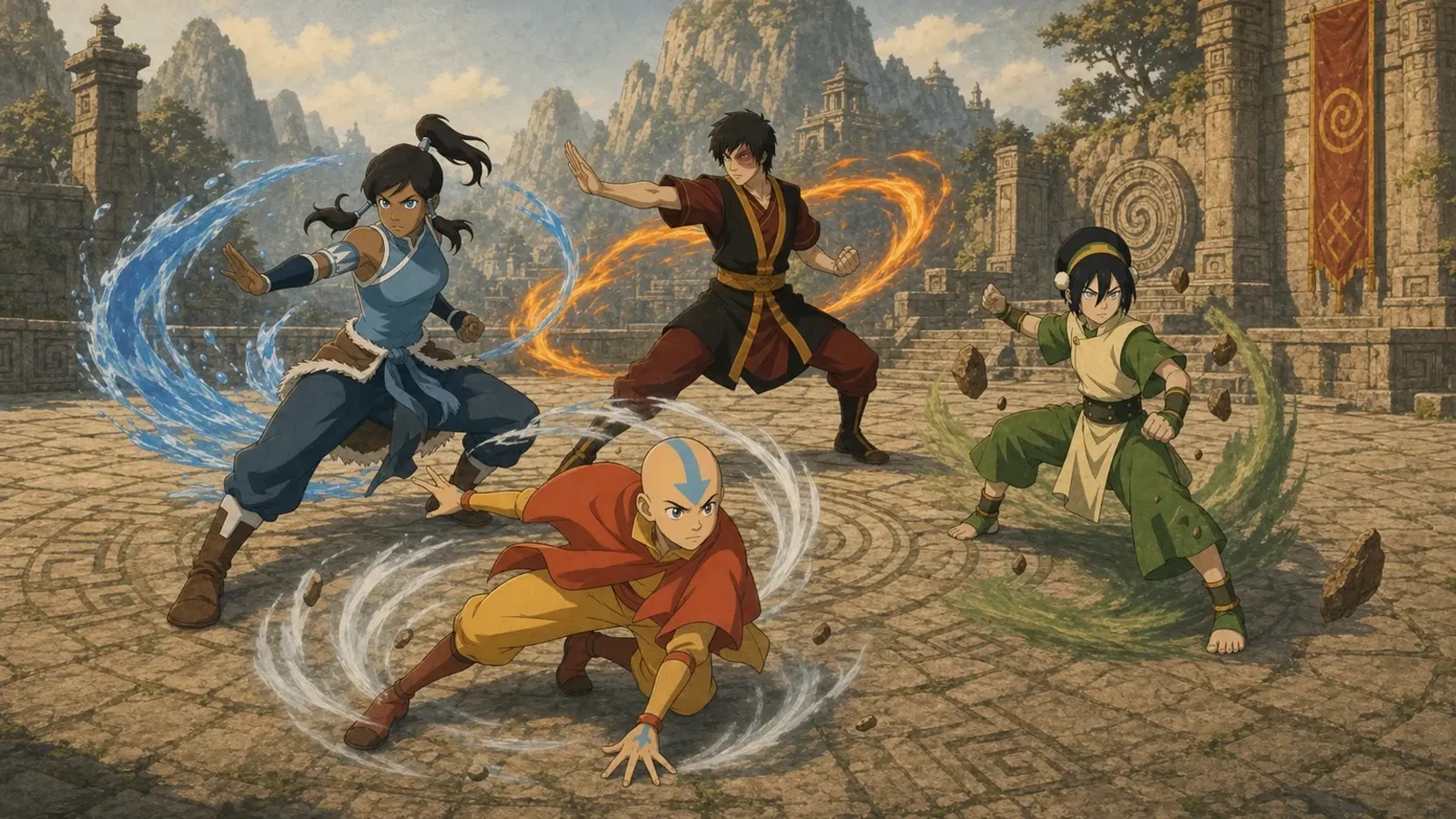
Fan editorial character-select lineup of Aang, Korra, Zuko, and Toph
ILLUSTRATIONLaunch roster
12playable slots
10distinct people
3supports each
5Year 1 fighters

Roster at a glance

How to read the launch cast

The Avatar Legends The Fighting characters roster contains twelve playable slots: Aang, Korra, Zuko, Katara, Toph, Sokka, Azula, Zaheer, Fire Lord Ozai, Kyoshi, Avatar State Aang, and Nightmare Korra. It represents ten distinct people because Aang and Korra each receive an alternate powered form as a separate selection. That distinction prevents a common misunderstanding: the Avatar forms are not simply round-limited transformations attached to the standard characters.

Every fighter selects one of three support characters. Developer descriptions say a support can modify abilities and open new strategic possibilities; official examples include Aang choosing Appa, Momo, or Gyatso and Korra choosing Naga, Raava, or Tonraq. The support layer means a roster count alone does not describe all practical variations. It also means launch-week matchup advice should state both the main fighter and support selection.

This guide does not assign a tier ranking after one day of public play. Early lists tend to reward obvious damage, simple pressure, or knowledge checks before defensive answers mature. Instead, the Avatar Legends The Fighting characters below are organized by visible combat ideas and confirmed developer explanations. Treat each recommendation as a starting hypothesis to test in Character Lessons and Training Mode.

Ten evidence-ready names now link to dedicated guides with verified mechanics, practical drills, source labels, and launch-version cautions. Avatar State Aang and Nightmare Korra remain overview-only because their public documentation is not yet strong enough for an honest long-form strategy page. This publication boundary keeps the Avatar Legends The Fighting characters directory useful without padding incomplete variants with speculation.

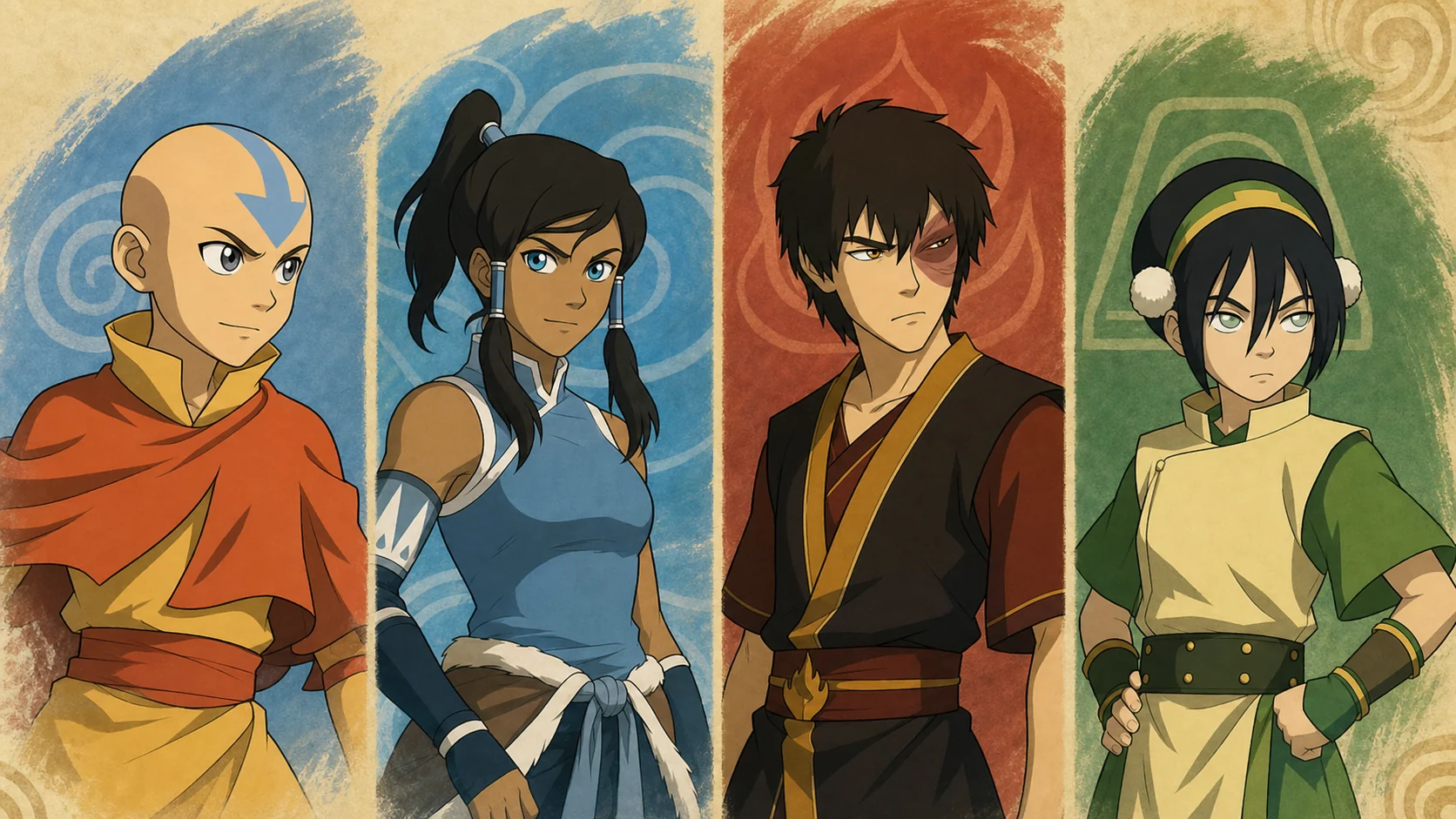
Fan editorial character-select portrait lineup featuring Aang, Korra, Zuko, and Toph in hand-drawn cel shading
ROSTER STUDYFour distinct movement identities

Air & mobility

Avatar Legends The Fighting Characters: space through motion

A

Aang

The standard Aang is the clearest entry into airbending movement. His identity centers on redirection, changing approach angles, and linking character-specific Flow options. Appa, Momo, and Gyatso are confirmed support choices. New players should test how each support changes his movement or cancel routes before memorizing long combos.

  • Start here if you value mobility and adaptable spacing.
  • Practice landing after aerial movement without giving up your turn.
  • Do not confuse constant motion with safe motion.
Read the complete Aang guide →
Z

Zaheer

Zaheer provides a more aggressive, antagonistic interpretation of airbending associated with the Red Lotus. Where Aang’s presentation evokes avoidance and freedom, Zaheer’s likely appeal is oppressive air control and unconventional approach timing. Verify exact move properties in the shipped command list rather than importing assumptions from the show.

  • Start here if you want air mobility with a threatening edge.
  • Map anti-air risks before relying on airborne offense.
  • Use replay review to separate real pressure from visual chaos.
Read the complete Zaheer guide →
AS

Avatar State Aang

Avatar State Aang occupies a dedicated roster slot and is built as a heightened alternative, not a mid-match power-up for regular Aang. His resource rules, support relationships, and technique properties deserve separate study. Choose him because you like his actual command set, not because the title sounds automatically stronger.

  • Treat him as a different matchup from standard Aang.
  • Compare normal ranges and Flow routes side by side.
  • Expect balance to price power through risk or resource structure.

Water & adaptation

Avatar Legends The Fighting Characters: control that changes rhythm

K

Katara

Katara brings waterbending’s flexible reach into the launch cast. Her best beginner lesson is likely range discipline: identify which water techniques are pokes, which are commitments, and which create a safe approach. Avoid assuming that a visually long attack is always safe when blocked.

  • Start here if you prefer measured control over constant rushdown.
  • Record the dummy to test gaps after common strings.
  • Learn one conversion from a midrange hit.
Read the complete Katara guide →
K

Korra

Standard Korra represents direct athletic pressure and an Avatar toolkit distinct from Aang’s evasive style. Naga, Raava, and Tonraq are confirmed supports. Compare how those choices influence approach, damage, or utility, and build a basic plan around one rather than switching every match.

  • Start here if you want assertive movement and clear momentum.
  • Practice stopping before overextending into a punish.
  • Use support choice to reinforce a single learning goal.
Read the complete Korra guide →
NK

Nightmare Korra

Nightmare Korra is the launch name reported for the separate powered Korra slot; some earlier materials and guides call the slot Avatar State Korra. The naming difference is editorially important, but the gameplay point is simpler: treat her frame data, routes, and matchup plan as independent from standard Korra.

  • Confirm current terminology in your platform build.
  • Do not transfer combos from standard Korra without testing.
  • Expect early community notation to be inconsistent.

Earth & commitment

Avatar Legends The Fighting Characters that own the floor

T

Toph

Toph is the clearest earth-control specialist among the Avatar Legends The Fighting characters. Official commentary uses her to illustrate support modification: an Earth Kingdom wrestling support can improve a stone-pillar technique and add properties useful for extended combos. She rewards players who enjoy forcing opponents to respect grounded space.

  • Start here if you prefer deliberate control and strong reads.
  • Track which attacks lose value against airborne movement.
  • Practice converting from the exact range of an earth pillar.
Read the complete Toph guide →
KY

Kyoshi

Kyoshi expands the Avatar lineage and presents earthbending with the scale and authority associated with her on-screen identity. Her roster position should still be evaluated through concrete tools: fastest normal, anti-air, reversal options, Flow behavior, resource use, and support effects. Lore power is not frame advantage.

  • Start here if you enjoy commanding attacks and commitment.
  • Measure recovery rather than judging only visual impact.
  • Build a compact punish before optimizing damage.
Read the complete Kyoshi guide →

Fire & pressure

Avatar Legends The Fighting Characters that take initiative

Z

Zuko

Zuko is a natural first choice for players who want recognizable fundamentals within a firebending package. Learn the spacing of his reliable grounded buttons, then add fire techniques to confirm or end pressure. A disciplined Zuko plan should be understandable even before advanced routes are stable.

  • Start here if you want a balanced offensive foundation.
  • Separate safe pressure enders from punishable commitments.
  • Save meter until you can name the reason for spending it.
Read the complete Zuko guide →
AZ

Azula

Azula has the most specifically documented stance identity. In Focused Mode she uses precise movement, oil traps, ignition, and grounded space control. In Firelord Mode she trades that composure for more destructive offense, altered abilities, and a large advancing fire wall. Her air mobility is also a defining strength.

  • Start here if you enjoy stance decisions and layered offense.
  • Learn one mode thoroughly before switching freely.
  • Test whether trap sequences are real, interruptible, or escapable.
Read the complete Azula guide →
O

Fire Lord Ozai

Ozai rounds out a fire-heavy villain group. His appeal is direct power, but players should resist reading narrative dominance as automatic competitive strength. Study how he approaches mobile opponents and how much risk accompanies his largest commitments.

  • Start here if you prefer imposing offense and strong punishment.
  • Identify a quick option for stopping disrespect.
  • Use training recordings to test defense after blocked specials.
Read the complete Fire Lord Ozai guide →

Non-bending ingenuity

Sokka wins with tools, timing, and wit

S

Sokka

Sokka is the clearest proof that the roster is organized around personality and fighting style rather than an elemental checklist. Developer commentary emphasizes weapons, wit, and movement. His boomerang and close-range tools can create a rhythm unlike any bender, while his Flow cancels reward creative sequencing.

  • Start here if you enjoy setups, weapon angles, and unconventional movement.
  • Track the boomerang’s position instead of autopiloting offense.
  • Practice a stable plan for opponents who refuse to chase.
Read the complete Sokka guide →

Post-launch plan

Year 1 Pass and the fifth vote

Current Steam edition details name Iroh, Ty Lee, Lin Beifong, and Bolin as the first four Year 1 fighters. A fifth slot is decided by a community vote associated with eligible Digital Deluxe pre-orders. Current candidate reporting names Amon, Kuvira, Bumi, Asami, and Tenzin. Release timing is not yet firm enough for this guide to present exact dates.

Some pre-release promotional images and secondary articles list different Year 1 names. Because the store page is the current purchase contract, this guide prioritizes its lineup and will revise the record if the publisher changes it. That source hierarchy keeps the Avatar Legends The Fighting characters page useful after launch-week marketing shifts.

IrohTy LeeLin BeifongBolinCommunity pick

Main selection method

Choose by decisions, not by tier lists

Make a shortlist of three Avatar Legends The Fighting characters whose movement you enjoy. In Character Lessons, note each fighter’s fastest normal, longest grounded poke, anti-air, throw, simple special, Flow movement, and Super Art. In Training Mode, confirm a short combo from the fastest practical starter and a punish from your strongest reliable button.

Then play five matches with each candidate without changing support. After every set, answer three questions: could you reach the range you wanted, did you understand why your turn ended, and could you convert the hits you actually landed? The best first main is usually the character who makes those answers clearest, not the one with the most dramatic combo video.

Support selection comes second. Choose the support that repairs a problem you can describe or strengthens a plan you already execute. A support that adds theoretical damage is less useful if its route is too fragile for live matches. Keep notes because early patches may change properties. When they do, re-test the decision rather than abandoning the character immediately.

Roster questions

Avatar Legends The Fighting Characters FAQ

Who are all 12 launch fighters?

Aang, Korra, Zuko, Katara, Toph, Sokka, Azula, Zaheer, Fire Lord Ozai, Kyoshi, Avatar State Aang, and Nightmare Korra.

Are Avatar State Aang and Nightmare Korra alternate costumes?

No. They occupy separate playable roster slots and should be treated as distinct movesets and matchups.

How do support characters work?

Each main fighter chooses from three supports before the match. Developer explanations say supports modify abilities and strategic properties. They supplement a 1v1 fighter; they do not turn the game into a conventional tag battle.

Is there a reliable launch tier list?

Not yet. Public play is too young, platform access is uneven, and defensive answers are still developing. Use matchup notes and stable tool evaluation instead of treating day-one rankings as settled fact.

Source desk

Research references

  1. ReferenceSteam: editions and Year 1 Pass
  2. ReferencePlayStation Blog: elemental design
  3. ReferenceNintendo Everything: final roster
  4. ReferenceDeveloper AMA

Sources were reviewed on July 24, 2026. Live game behavior and storefront terms can change after publication.