
Play toward
- Play Kyoshi toward deliberate exchanges that make the opponent answer you.
- Use Kyoshi supports that clarify rhythm instead of distracting.
Earth fighter dossier · Launch version
Kyoshi is an earth route for players who want deliberate authority, flexible support-backed decisions, and a clean split between official design comments and early player guidance.
On this page
Evidence status
Kyoshi copy here uses official launch materials, a current developer AMA, and visibly labeled early community references. It does not invent Kyoshi frame data, damage values, matchup charts, or solved combo trees.
Reviewed July 24, 2026Character overview
Official reveal copy leans hard into stature and impact. The safer competitive reading is not that lore power wins matches. It is that the team wants this fighter to feel imposing, deliberate, and unmistakable on screen.
The most useful extra source is the July 2026 developer AMA. One official reply uses this fighter as the prime example of a character who does not need extreme input speed to function. That gives a rare kind of launch clarity: careful, methodical control is an intended learning lane.
Character reel · Official trailer footage
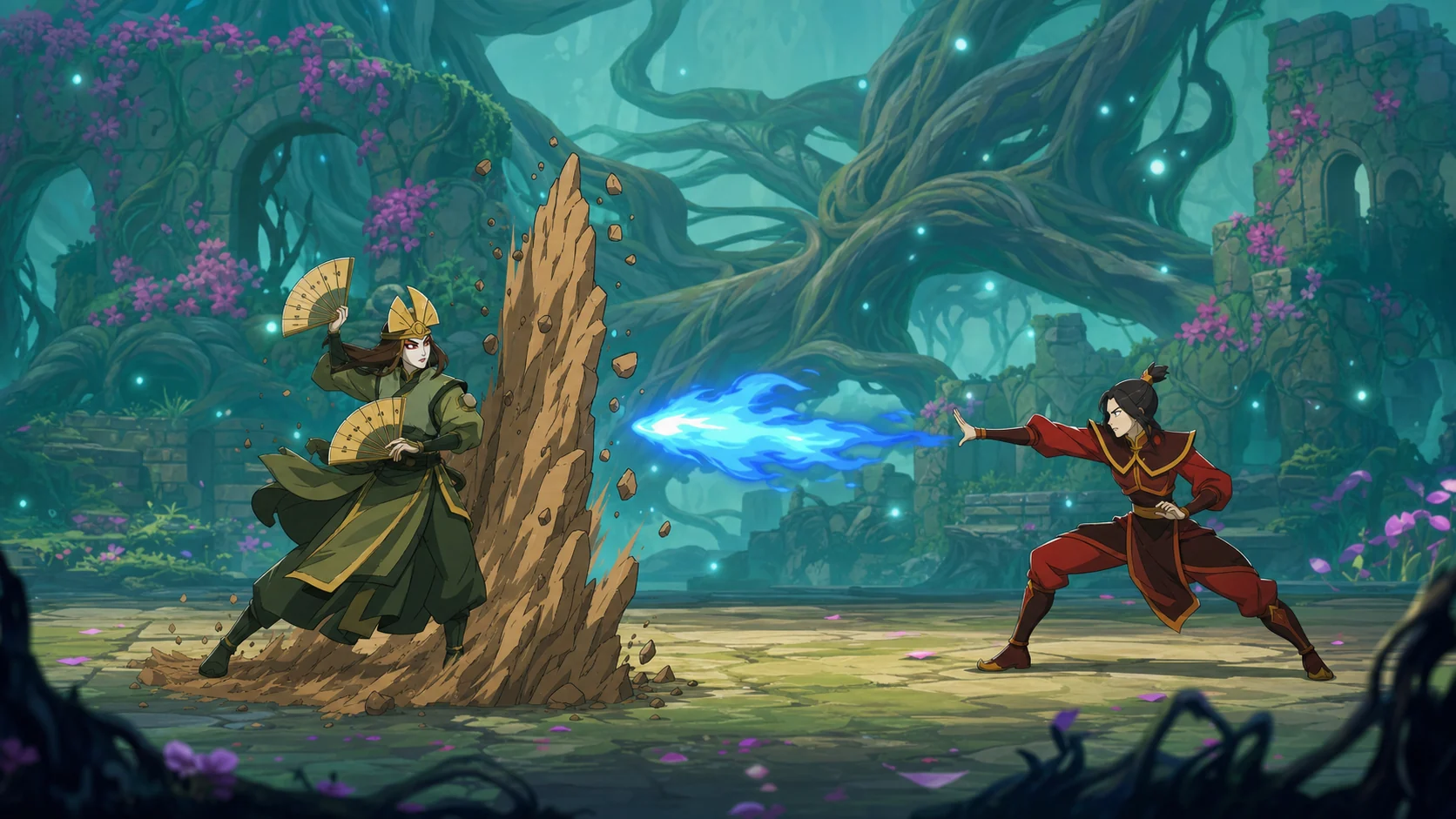
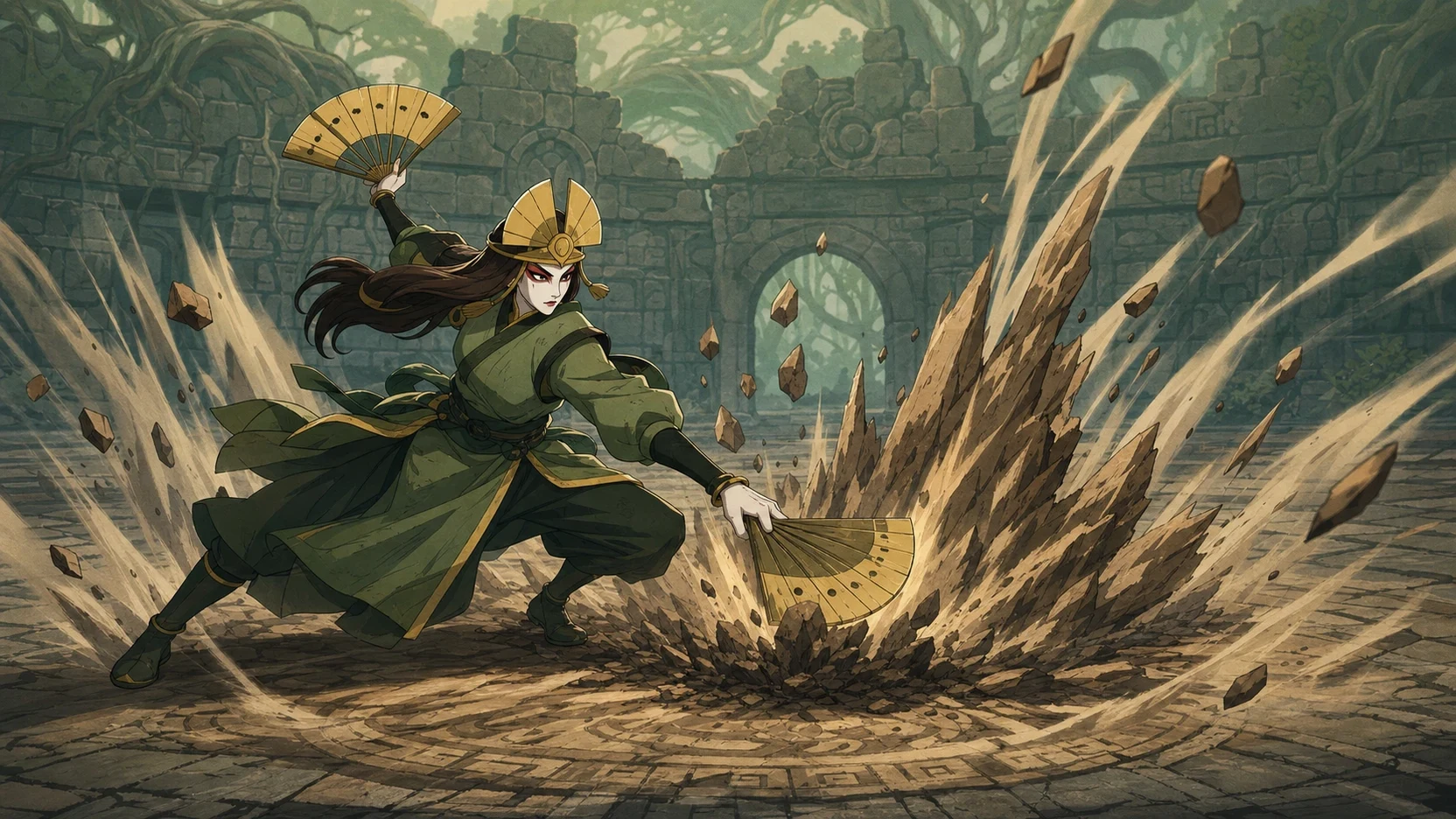
Kyoshi's official character trailer is useful for reading scale, stance, and intended impact, but visual force is not frame advantage. Recreate the shown situations and measure Kyoshi's startup, recovery, anti-air coverage, and reliable punish route.
Choose a Kyoshi button that reliably reaches unsafe recovery and build a short conversion before chasing maximum damage.
Measure each large Kyoshi action on whiff so its visual authority does not hide a punishable decision.
Record jumps and aerial movement at different ranges to learn where Kyoshi's grounded control stops being sufficient.
Button labels use universal notation. Confirm the current command list and support effects in your own game build.
Official identity
Official reveal language is straightforward: she stands tall and hits hard. That is presentation, not a damage spreadsheet, but it still points to weight and certainty.
Because this fighter carries franchise meaning, player expectations can drift fast. Keep interpretation grounded in gameplay evidence: let lore explain the excitement and official design comments explain how the character should be learned.
Evidence boundary
Official AMA comments are the most trustworthy design note we currently have. In that AMA, developer Dom used this fighter as the prime example of someone who is not about huge input volume. The description was careful, deliberate, and methodical while still able to open opponents and keep options in neutral.
Early player guidance is a different class of evidence. Community pages and launch-day guides are already talking about sturdiness, route flexibility, and large-screen presence. That can help, but it is still provisional. When player impressions diverge, official notes win until the shipped game proves otherwise.
Round pacing
Neutral should feel authored, not rushed. The round should show fewer, clearer claims about space. This character does not need to win by looking busy; each movement should ask the opponent a serious question.
That is where many players will either click or bounce off. Patience makes every exchange feel reasoned. The simplest correction is to slow down until spacing and confirms feel measurable again.
Support thinking
Because the AMA presents this fighter as methodical, support testing should reinforce one question first: which support makes that deliberate game clearer? One option may help hold space. Another may make confirms cleaner once the read lands.
This separates the character from the other earth route. Judge supports not only by what got bigger, but by what made the plan more reliable.
Community watch
Early community sources are already giving the character a recognizable shape. Community wiki language points toward durability and route control, while launch-day video guides focus on comfortable movement before optimization. The better early material is trying to make the character understandable, not solved.
Still, these conclusions can drift fast. Use community sources as a map of current questions: what ranges matter, what supports are being explored, what routes seem practical, and where people are still guessing.
Pick decision
This fighter fits readers who like authority more than chaos. If you enjoy slowing a match down enough to make the opponent respect the next action, the investment is justified.
The best personal test is simple. After a set, ask whether the setup to the hit was already satisfying. If yes, this is probably the right kind of deliberate. If the only fun part was the payoff, another fighter may match your instincts better.
Practical match plan
This launch-version playbook separates durable decisions from early community conclusions that may change after balance updates.
Training mode checklist
The shipped Training Mode exposes hitboxes, frame data, save states, and configurable situations. Use it to reproduce every exact claim.
Run Kyoshi's core movement and special inputs slowly, then at match pace, to make sure the character still feels deliberate instead of hurried.
Take one Kyoshi idea from the AMA and one from a community guide, then test both in the same setup until you know where they align.
Mark the ranges where Kyoshi feels most in control and repeat entry into those lanes until that claim happens without panic.
Use one support for ten straight minutes and answer a simple question: did Kyoshi become clearer or merely busier?
Review lost rounds and note every moment Kyoshi failed because you sped up the plan before Kyoshi had earned that speed.
Character questions
Official AMA comments point the other way. The developers used Kyoshi as an example of someone who can be deliberate and methodical rather than nonstop high-input.
Trust them as experiments, not verdicts. Early Kyoshi guides are useful for forming lab questions, but official comments and your own tests should decide what stays.
Toph's public materials emphasize battlefield control and support modification examples, while Kyoshi's clearest public design note emphasizes a deliberate, methodical rhythm. Both are earth routes, but they are not the same earth lesson.
Verify whether the chosen support helps neutral clarity. That keeps Kyoshi aligned with the official AMA emphasis on methodical decision-making.
Source desk
Sources were reviewed on July 24, 2026. Live game behavior and storefront terms can change after publication.