
Play toward
- Play Korra where movement, support pressure, and direct confirms overlap instead of choosing only one axis.
- Let Korra's forward threat create hesitation, then convert cleanly when the opponent finally overreacts.
Water fighter dossier · Launch version
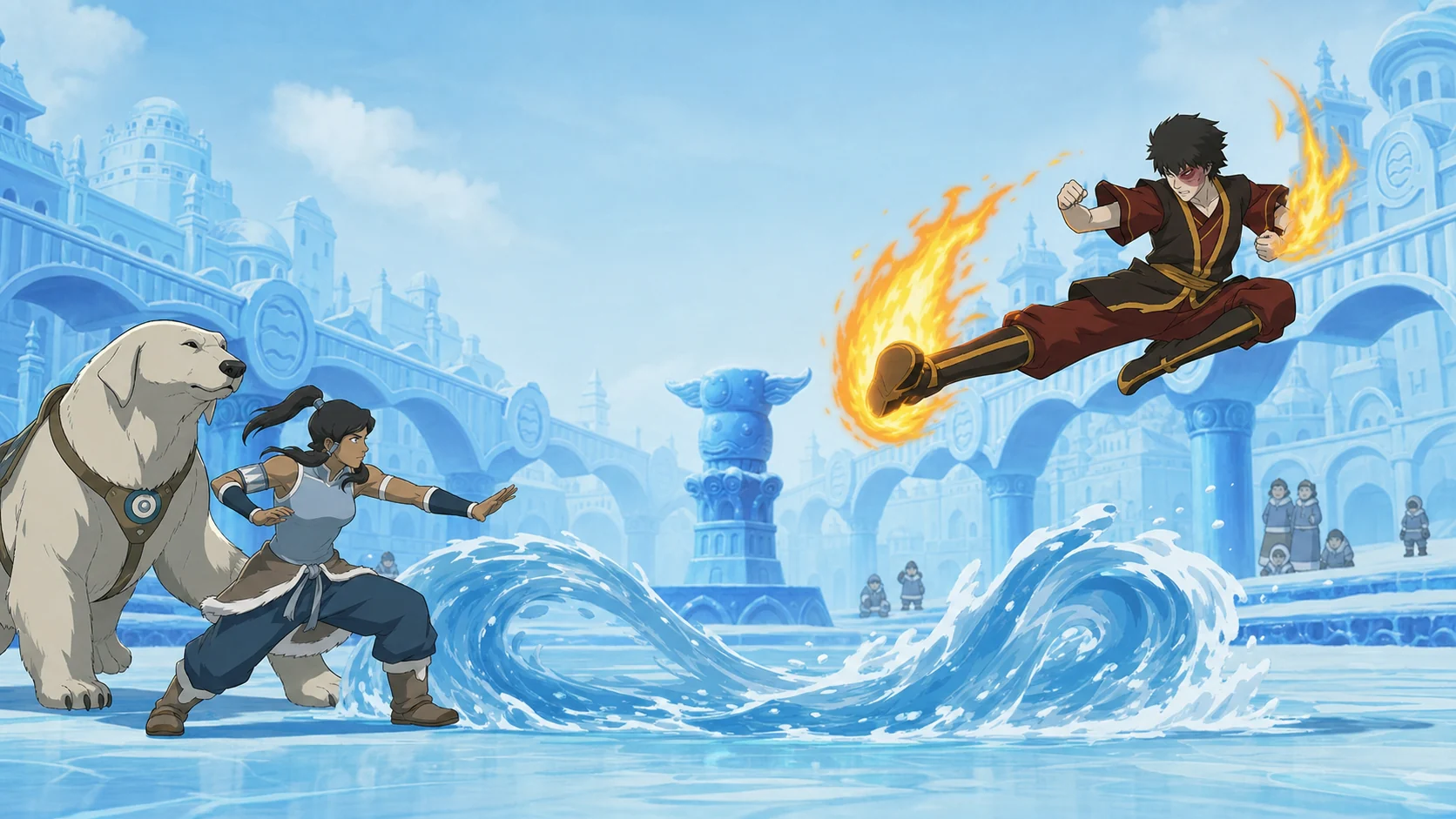
Korra is the straightforward Avatar pick for players who want pressure, movement, and momentum. This guide separates official and developer confirmations from beta and launch-week player reporting.
On this page
Evidence status
Korra's launch-slot status and support trio are well corroborated. Her movement shape, overhead threat, and reward profile are strongly discussed by current players, but character-specific strength claims still need ongoing patch-by-patch verification.
Reviewed July 24, 2026Character overview
Korra is a launch water fighter whose public teaching material emphasizes movement and pressure. She still needs spacing, support planning, and defense checks, but current coverage names three supports and an official Techniques 101 trailer centers aerial somersault movement. Claims about assist strength, overhead threat, or damage come from beta and launch-week players, so test them in the shipped build before building a plan around them.
Character reel · Official technique footage
The official Korra Techniques 101 clip isolates an aerial somersault, making it useful for studying height changes and approach timing. Verify the final input, recovery, and support interaction in your build before treating the footage as a complete Korra route.
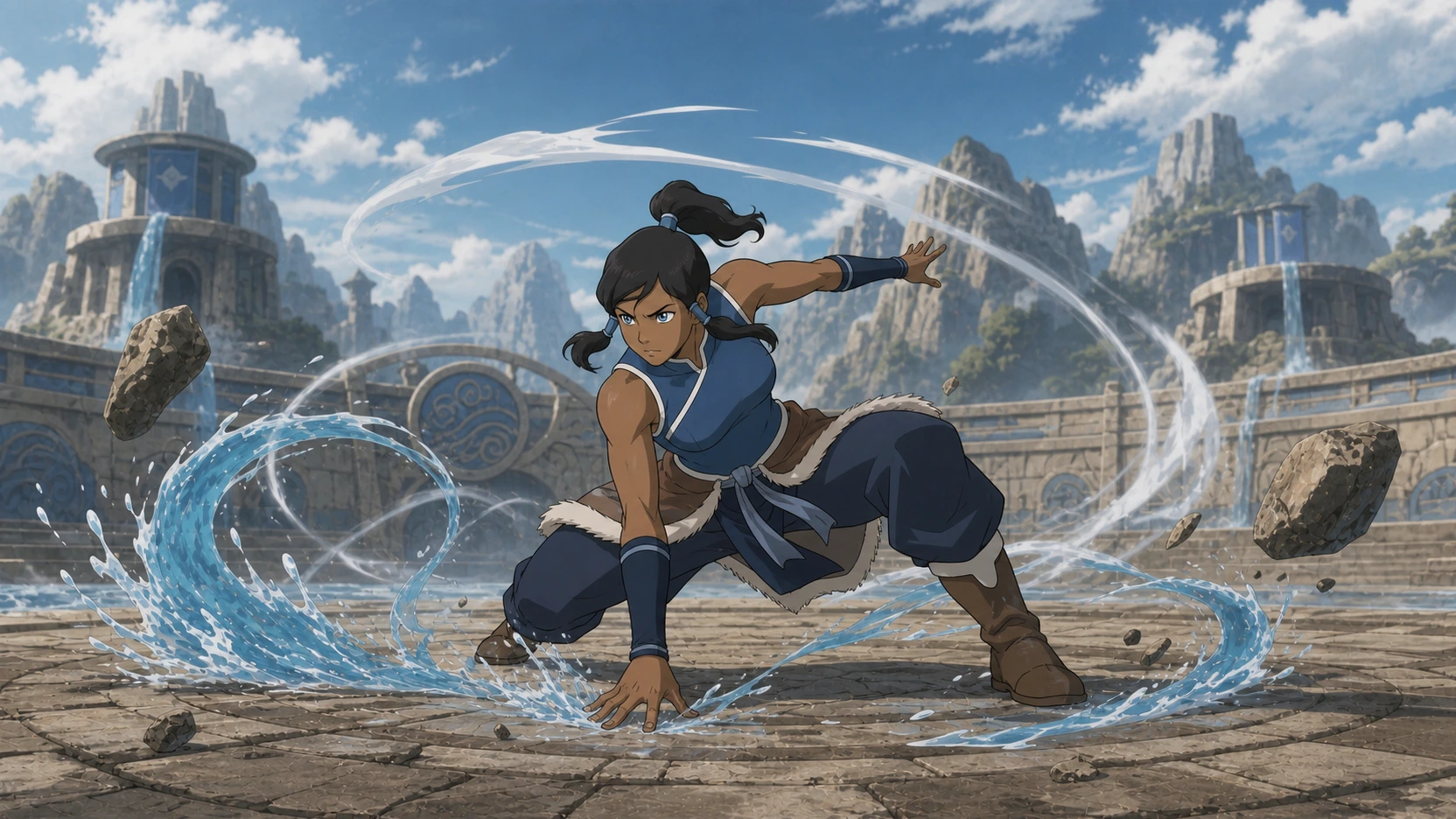
Decide whether Korra should attack, guard, or disengage after the somersault before using the movement as an approach.
Record a common anti-air and test the Korra route at several ranges instead of assuming the animation bypasses defense.
Alternate direct pressure with a deliberate pause so Korra's forward movement remains difficult to predict.
Button labels use universal notation. Confirm the current command list and support effects in your own game build.
Official fact
Korra is one of the headline launch fighters and appears throughout the official site, storefront coverage, and final roster reporting. Nintendo Everything's roster report also repeats the current support trio: Naga, Raava, and Tonraq. She was part of the closed beta roster called out in PlayStation's June 29 update, which explains why there is so much public footage. Use that abundance correctly: it makes her easier to study, not solved.
Developer-backed identity
One of the clearest developer breadcrumbs is the Korra Techniques 101: Aerial Somersaults trailer. Even without a full command breakdown, that title tells you how the game wants her to be perceived: not merely as a water projectile character, but as a fighter who threatens with body movement, angle changes, and fast route-taking decisions. Practice should follow that identity. Do not spend the first session fishing for max damage. Ask whether Korra can enter and exit pressure without becoming predictable, and which support makes the movement clearer.
Game-verifiable information
She has unusually clear support framing because current sources consistently name Naga, Raava, and Tonraq. That gives you a practical study method: spend a full set with one support and define the lesson. Maybe one clarifies approach rhythm, one reinforces pressure structure, and one makes utility or extension choices easier to feel. Because the game ships with save states, frame data, and replays, Korra can be evaluated support by support instead of vibe by vibe.
Beta and launch-week community
The most useful current community summary comes from pre-1.0 beta discussion: Korra is described as a mid-risk, high-reward character with simple-string damage, strong assists, dangerous overheads, and movement that becomes much scarier once the player understands the Flow options. That is a coherent picture, but it needs a timestamp attached. Those are beta and launch-week observations, not constitutional law.
Practical playbook
She is easiest to throw away when the player mistakes activity for advantage. A moving Korra is not automatically a winning one. The best early plan is to threaten one clean way in, one support-backed confirm, and one reliable escape after pressure ends. Once that shell is stable, add the overhead timing, second confirm, or support-specific route you actually trust.
Main-selection test
She is probably the better first water main for someone who wants the game to meet them halfway. The fantasy is easy to understand, the official material features her heavily, and the current player reputation points toward visible reward when movement decisions are correct. She is less ideal if you keep confusing bravery with quality. Stay with Korra if you enjoy refining assertive fundamentals; step away for a bit if every round turns into random dashes, random jumps, and regret.
Practical match plan
This launch-version playbook separates durable decisions from early community conclusions that may change after balance updates.
Training mode checklist
The shipped Training Mode exposes hitboxes, frame data, save states, and configurable situations. Use it to reproduce every exact claim.
Run her with Naga, Raava, and Tonraq in three separate sets and name where each version feels strongest.
Create a save state just outside her preferred approach range and repeat one entry until you know whether spacing or passivity is doing the work.
Record a guard-first dummy and test where she should stop, reset, or disengage so the offense does not collapse after the first blocked turn.
Use replay mode after ten games and note every round where movement looked fast but did not improve position.
Pick one current claim about overhead threat, assist value, or damage and verify it before you build your whole game around it.
Character questions
Current roster reporting treats base Korra and Nightmare Korra as separate launch slots, so this page covers the base version only.
Current source coverage consistently lists Naga, Raava, and Tonraq as Korra's support trio.
She looks like one of the better first-main candidates for players who enjoy active offense and movement, as long as they still review failed entries honestly.
Only as temporary guidance. She has a lot of beta and launch-week chatter, but real standing depends on patch history and better matchup knowledge over time.
Source desk
Sources were reviewed on July 24, 2026. Live game behavior and storefront terms can change after publication.