
Character Lesson
Run the authored lesson once. Do not grind every advanced sequence. Mark the buttons that feel easy to place and the Flow options you understand immediately.
First-hour curriculum · Stable skills
A practical learning path built around decisions that survive balance patches: defense, range, anti-airs, confirms, resource purpose, and match review.
The first principle · Avatar Legends The Fighting Beginner Guide
This Avatar Legends The Fighting beginner guide starts with a deliberately small match plan. Fighting games present dozens of commands, but a new player cannot evaluate all of them at full speed. Your first goal is not to perform the longest Combo Trial. It is to understand why you were hit, where your turn began, and which simple action covers the situation in front of you.
Choose one main fighter and one support for at least three sessions. Learn a fast normal, a midrange poke, an anti-air, a throw, and a short confirm. Add one special for ending a combo and one Flow movement option for solving a specific obstacle. That toolkit is enough to play real matches, collect useful evidence, and identify the next gap.
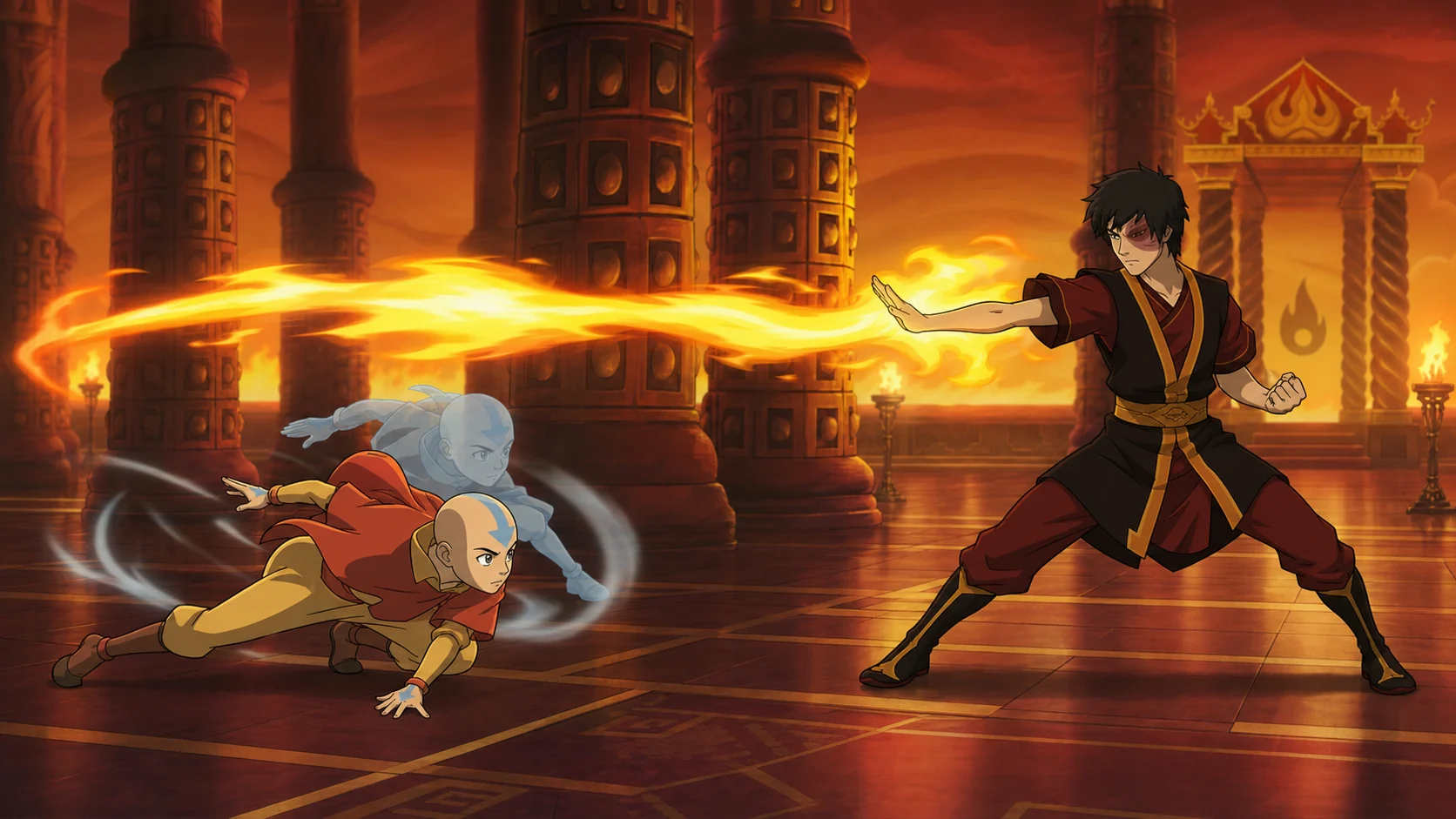
The game’s hand-drawn animation can look busy during elemental attacks. Watch the opponent’s body and position, not only the effects. Range, jump arc, guard height, and recovery determine the decision. Visual spectacle becomes readable after you attach each animation to one of a few categories: approach, low, overhead, throw, projectile, reversal, or retreat.
Starter reel · Official tutorial
Support 101 is useful because it frames support selection as a gameplay choice rather than decoration. A beginner should still learn one stable set of normals, one Flow answer, and one short confirm before changing supports or chasing advanced routes.
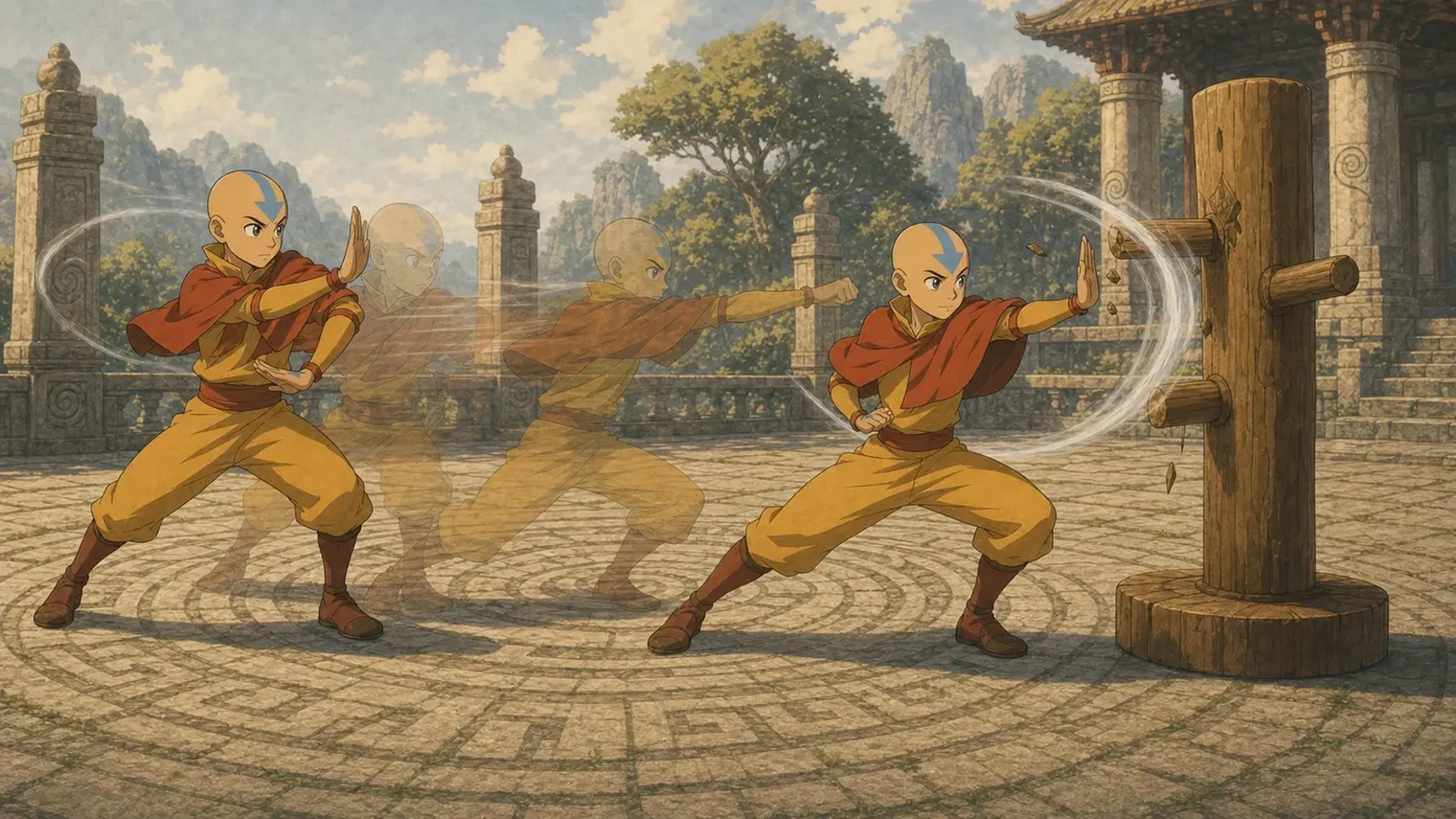
Start with a fast normal, poke, anti-air, throw, short confirm, and one purposeful Flow choice.
Keep the main fighter and support fixed while learning so every match produces comparable evidence.
After a set, identify one missed anti-air, unsafe commitment, or failed confirm and reproduce it in Training Mode.
Button labels use universal notation. Confirm the current command list and support effects in your own game build.
First 60 minutes
Run the authored lesson once. Do not grind every advanced sequence. Mark the buttons that feel easy to place and the Flow options you understand immediately.
In Training, press every normal while standing, crouching, and jumping. Identify your fastest close button, longest grounded poke, and preferred anti-air.
Build one short combo from a fast hit and one punish from a heavier starter. Reliability matters more than theoretical damage.
Record a low, overhead, jump-in, and throw approach. Play them back randomly and practice choosing guard height or movement.
Enter Arcade, Casual, or a lobby with one objective: anti-air every obvious jump, or confirm one starter. Ignore the result screen and track the objective.
Defense first
Hold back for standing guard and down-back for crouching guard. Crouch guard is a practical close-range default because it covers lows and mids; stand when you recognize an overhead or aerial attack. Throws beat passive guard, so your defense must eventually include throw awareness, movement, or a deliberate challenge.
Blocking lets you see an opponent’s preferred sequence without paying full damage. Count the hits, notice where they pause, and watch whether they end at a distance. After the match, recreate the sequence with a training recording. If your fast button loses, the gap may be too small or nonexistent. If it wins only at one range, note that condition.
A core lesson in any Avatar Legends The Fighting beginner guide is that “my turn” is evidence, not a feeling. Frame data, spacing, pushback, and cancels decide. The game’s training display can help you replace frustration with a testable question.
Neutral game
Neutral is the phase where neither player has a guaranteed attack sequence. Your job is to occupy a useful range without becoming predictable. Walk or Flow toward the range of your chosen poke, stop before the opponent’s strongest button, and be ready to anti-air a jump that attempts to skip the ground game.
Press fewer buttons with clearer reasons. A long heavy attack may control space but expose large recovery when it misses. A light attack may be safe but fail to reach. A projectile may invite a character-specific Flow response. Every choice trades coverage, speed, reward, and risk.
Use the stage grid in Training Mode if available. Record the range where your poke touches, where it whiffs, and where the opponent can punish its recovery. Then practice moving into the first range and stopping. Deliberate stopping is an underrated skill because many beginners move forward until they collide with an attack.
Your five-tool kit
Your quickest dependable normal. Use it to interrupt disrespectful delays and begin a small confirm. Do not press it blindly during airtight pressure.
A medium-range attack that makes walking forward costly. Learn its exact reach and whether it is punishable when blocked or missed.
An attack that reliably covers the space above you. Practice against recorded jumps from several distances; one answer may not cover every angle.
A simple way to challenge opponents who block. Walk or Flow into range after conditioning them to respect a strike, then throw rather than extending a risky string.
One route that spends Energy only after the starter hits. This prevents resource waste and teaches visual confirmation under pressure.
Flow discipline
Flow is the signature mechanic, and that makes it tempting to press constantly. Resist. Each character’s Flow options cover different paths and carry different vulnerabilities. Start with one defined use: passing under a known projectile, leaving a predictable pressure ender, changing an aerial angle, or creating a whiff at midrange.
Record the training dummy performing the problem. Repeat your Flow answer ten times from the same range. Then vary the timing and add a second dummy action that beats careless Flow. This produces recognition instead of a rehearsed escape that fails as soon as the opponent changes rhythm.
When reviewing a captured match or written notes, pause before every Flow use and state the intended answer. If you cannot name it, label the movement as unplanned. The goal of this Avatar Legends The Fighting beginner guide is not to eliminate creativity; it is to give creativity a stable foundation. Do not depend on an in-game replay tool unless your current build confirms one is available.
30-minute routine
Perform your special commands, throw, Flow directions, and Super Art on both sides of the screen. Reset the count after any accidental input.
Randomize jump, empty movement, and grounded approach. Attack only when the dummy jumps; keep guard or spacing otherwise.
Set random guard. Complete your combo when the starter hits and end safely when it is blocked.
Randomize low, overhead, throw approach, and pressure end. Practice guard height, throw response, and one measured challenge.
Play matches with one written objective. Afterward, review a capture or your notes and record one success plus one recurring failure.
Meter & support
Energy Points enable enhanced specials and Super Arts. For your first sessions, choose one confirmed meter use. Do not spend on a raw cinematic attack simply because the gauge is full. A blocked or missed Super can lose both resource and position.
Keep one support while learning. If the support modifies a move, practice both the ordinary situation and the modified result until you can explain the difference. Later, change supports to solve a matchup problem or unlock a route you can execute consistently. “This support gives my pillar enough property to extend the combo” is actionable; “this support seems strongest” is not.
Character-specific states deserve the same discipline. Azula’s Focused and Firelord modes, for example, change tools and priorities. Learn a stable plan in one state before adding frequent switching. Complexity is valuable only when you can use it under match pressure.
During a real match
Observe movement. Show one safe poke. Do not reveal every resource immediately. Note whether the opponent jumps, retreats, attacks, or uses Flow at round start.
Use one simple strike-or-throw choice. Keep the sequence short enough that you recognize whether it hit or was defended.
Do not force a raw Super. Return to guard, anti-air, and measured space control. One punish can reverse momentum without gambling the entire round.
Name one repeated habit from the opponent. Change one answer. Too many simultaneous adjustments make it impossible to learn which decision helped.
Online progression
The current launch package provides online play with rollback netcode and cross-play on supported versions. Ranked, Lobbies, and Spectator Mode are still described in post-launch communication rather than assigned an exact delivery day. The verified roadmap ledger tracks that distinction.
Start with the environment that actually exists in your build and keeps you playing thoughtfully. When Ranked arrives, its ladder may help produce closer matches after the pool collects enough data. When expanded lobbies arrive, longer arranged sets may expose adaptation. Those are useful learning roles, but they are conditional advice—not claims that the features are live today.
Review one captured match or set of notes for every five games. Look for the first repeated error rather than the final combo that ended the round. The earlier mistake—an unsafe poke, missed anti-air, automatic Flow, or panic spend—usually created the later damage.
New-player questions
Choose the fighter whose movement and basic buttons you can place deliberately. Try three candidates, keep one support fixed, and compare clarity of range, defense, and simple confirms rather than launch-day tier placement.
No. Trials demonstrate possibilities, but a short reliable confirm, anti-air, and punish will improve real matches faster. Return to advanced trials after your match plan is stable.
Flow is character-specific movement, not universal invulnerability. You may be using it during a tight string, choosing a path the attack covers, or acting at the wrong range. Recreate the situation in Training Mode.
After Ranked officially ships, start when you can play a full match without losing track of your basic objective. It should be treated as a learning tool, not a graduation test. No exact Ranked release date was public at the July 28 review.
Source desk
Sources were reviewed on July 28, 2026. Live game behavior and storefront terms can change after publication.